7 Habits: Keys to Personal Effectiveness
Unlock the core habits of success with this summary of The 7 Habits of Highly Effective People—timeless lessons to lead, grow, and thrive in 2025.

Imagine this: Monday morning. Your inbox is already overflowing. Your phone buzzes with notifications – urgent, but are they truly important? You have a major project looming, one that requires deep thought and focused effort, yet you find yourself constantly pulled into meetings that feel unproductive, fighting fires, and responding to the demands of others. You feel perpetually busy, like you're running hard on a hamster wheel, but at the end of the week, you look back and wonder, "What did I really achieve? Am I actually moving towards the goals that matter to me, or just reacting to the chaos?"
This feeling – of being busy but not effective, of wanting more meaning and control but feeling adrift – is incredibly common in our fast-paced world. We chase success, often defined by external markers, yet true fulfillment and lasting achievement can feel elusive. We try quick fixes, new apps, and productivity hacks, hoping for a magic bullet. But what if the answer wasn't in mastering the latest technique, but in transforming ourselves from the inside out?
The book The 7 Habits of Highly Effective People might just be the lifeline you need. Written by Stephen R. Covey, a renowned educator and organizational consultant, this book is a timeless classic focused on personal development and interpersonal effectiveness. First published in 1989, it remains relevant today, guiding individuals towards meaningful and lasting success through foundational principles.
Covey emphasizes principle-centered living, arguing that true effectiveness stems from aligning our actions with universal values like integrity, empathy, and growth. In this summary of The 7 Habits of Highly Effective People, let's dive into the core of Covey’s philosophy, unpacking the seven habits that have empowered millions to achieve holistic success.
Key Takeaways
- Achieve lasting effectiveness by focusing on character and principles, not just busyness.
- Master personal habits (1-3) first to build a foundation for effective relationships (4-6).
- Sustained success requires continuous self-renewal across physical, mental, social, and spiritual areas (Habit 7).
- Real change starts from within, demanding a shift in your core perspectives and values.
Summary of The 7 Habits: Foundations of Success
Before diving into Covey’s 7 habits, it’s important to understand the foundational ideas of the book:
Character Ethic vs. Personality Ethic
- Character Ethic: Core principles that are based on timeless principles across most religious, social, and ethical systems, including integrity, honesty, courage, and perseverance.
- Personality Ethic: Surface-level traits such as personality traits, skills, and maintaining a positive attitude.
Covey argues that Character Ethics are the cornerstones of lasting success compared to mere surface-level personality traits.
The Power of Paradigm Shifts
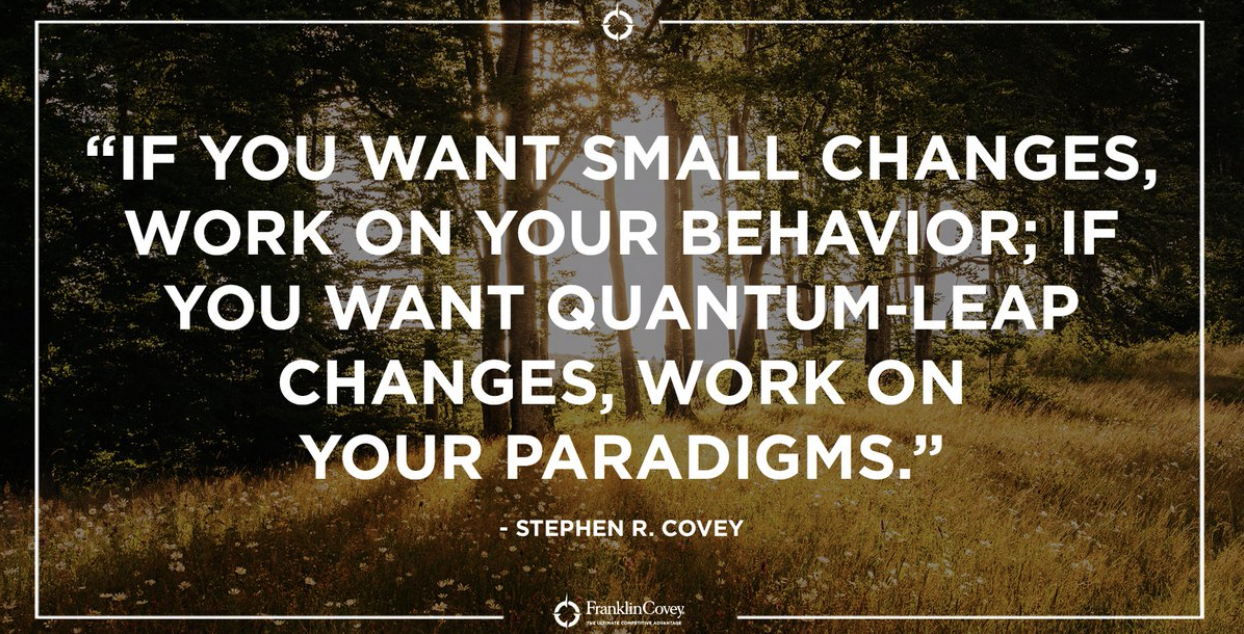
To change our lives, we must change our perceptions. This requires a paradigm shift – a fundamental change in how we view and interact with the world. Paradigms are the models through which we perceive and understand reality. Changing these paradigms is essential for cultivating effective habits.
Summary of The 7 Habits Part 1 - Your Personal Victory
Habit 1: Be Proactive
Being proactive means taking responsibility for your choices and actions. It's about recognizing that between every stimulus and response, there is a space where you can choose how to react. This habit encourages you to focus on your circle of influence rather than your circle of concern. By doing this, you take control of what you can control and do not let external forces dictate your actions.
How to Apply to Our Life
Imagine a situation where you are stuck in traffic. Instead of getting frustrated, you could use this time to listen to a book or reflect on your day. This proactive approach turns a potentially negative situation into a positive one.
Habit 2: Begin with the End in Mind
"Begin with the End in Mind," involves envisioning what you want in the future. This habit is about creating a personal mission statement that guides your actions. To illustrate this, Covey invites us to imagine our funeral: Think about how you would like your loved ones to remember you, what achievements you would like them to acknowledge, and the difference you made in their lives.
This thought experiment helps us identify our core values and create a vision for our life. By having a clear vision, you can ensure that each day of your life contributes to the life you want to live.
Actionable Insights
- Identify old scripts that may be taking you away from what matters most and writing new ones that align with your deepest values.
- Reflect regularly on your long-term goals.
Habit 3: Put First Things First
The third habit is about prioritizing tasks based on their importance rather than their urgency. This habit involves time management and personal leadership. Covey introduces the Eisenhower Matrix, which categorizes tasks into four quadrants:
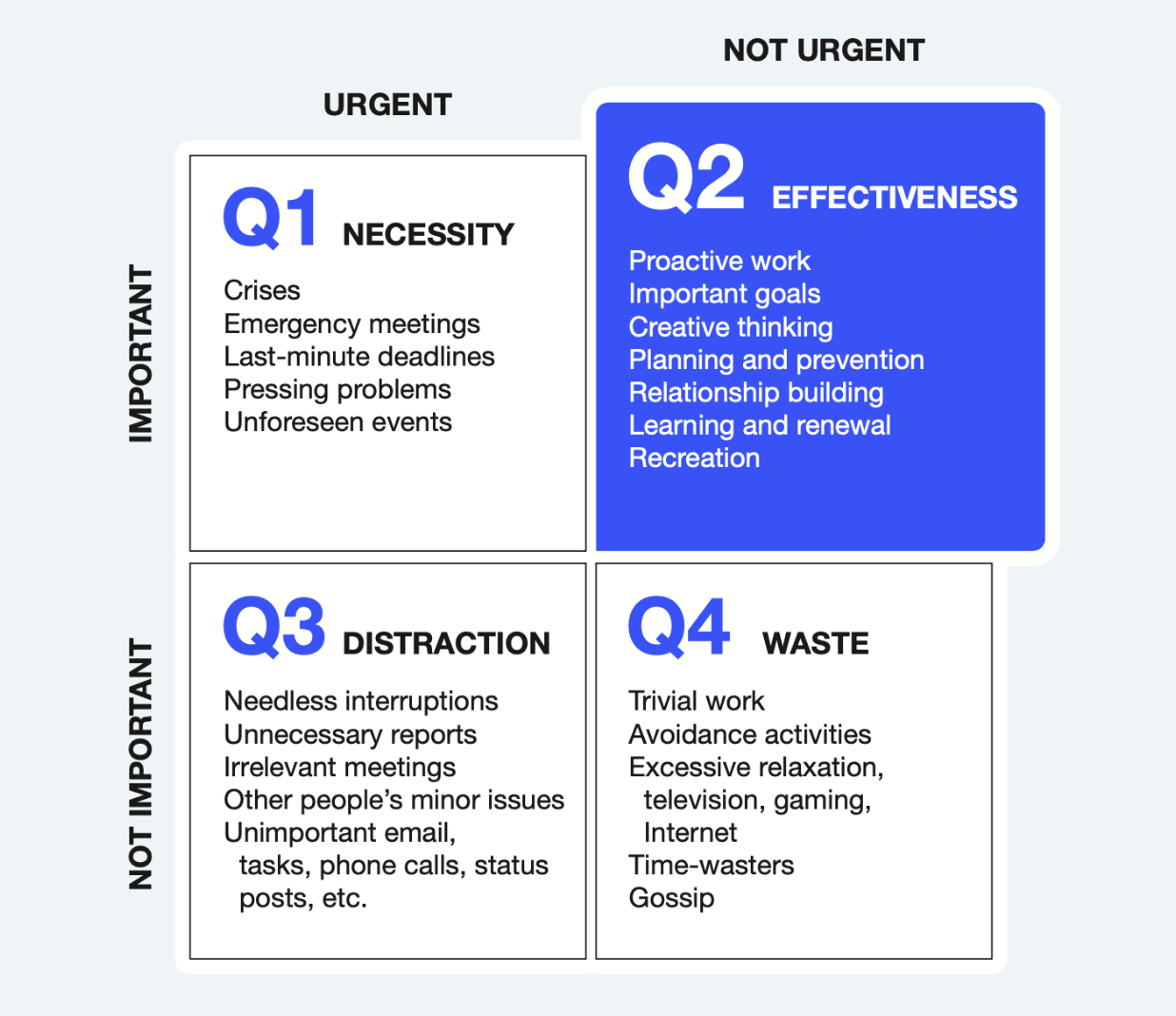
The FranklinCovey Time Matrix (Source: FranklinCovey)
By focusing on the most important tasks first, you can achieve your long-term goals and prevent crises.
How to Apply to Our Life
For instance, if you have a project deadline and a meeting that could be delegated, prioritize the project deadline as it is both urgent and important. This habit helps you maintain personal integrity by minimizing the difference between what you say and what you do.
Summary of The 7 Habits Part 2: Public Victory
Habit 4: Think Win-Win
The fourth habit, "Think Win-Win," is a philosophy of human interaction that seeks mutual benefit for all parties involved. This habit is not about being nice or using quick-fix techniques; it's about adopting a character-based code for collaboration. Win-win solutions are based on the principle that life is a cooperative, not a competitive, endeavor. By seeking solutions that benefit everyone, you build stronger, more lasting relationships.
How to Cultivate a Win-Win Mindset
- Shift from scarcity thinking ("If they win, I lose") to abundance thinking ("We can both win").
- Seek long-term solutions that benefit all parties involved.
- Build trust through fairness, integrity, and cooperation.
How to Apply to Our Life
For example, in a business negotiation, instead of focusing solely on your own gains, look for solutions that benefit both parties. This approach fosters trust and long-term success.
Habit 5: Seek First to Understand, Then to Be Understood

The fifth habit emphasizes the importance of empathic listening. Before expressing your own thoughts and feelings, you must first seek to understand the other person's perspective. This habit involves active listening and is crucial for effective communication and building strong relationships.
Imagine a conversation where you feel misunderstood. Instead of immediately expressing your point of view, take the time to listen to the other person's perspective. This approach can resolve conflicts more effectively and deepen your understanding of others.
Actionable Insights
- Listen actively without interrupting.
- Validate the other person's viewpoint before sharing your own.
Habit 6: Synergize
Synergize is about combining the strengths of individuals to achieve something greater than the sum of its parts. This habit involves valuing diversity and seeking out the best in people. By synergizing, you can create solutions that are better than what any one person could have come up with alone.
For instance, in a team project, instead of working individually, collaborate to bring together different perspectives and skills. This synergy can lead to innovative and effective solutions.
💡Actionable Tips: Encourage open communication. Value diversity and different ideas.
Summary of The 7 Habits Part 3: Your Continuous Development
Habit 7: Sharpen the Saw
The seventh and final habit, "Sharpen the Saw," is about self-renewal. It involves balancing and renewing your resources, energy, and health to maintain a sustainable, long-term, effective lifestyle. This habit is divided into four dimensions:
- Physical: Regular exercise and healthy nutrition.
- Mental: Reading, learning, and mental challenges.
- Emotional/Social: Building relationships, empathy, and emotional intelligence.
- Spiritual: Reflection, meditation, and connecting to deeper values.
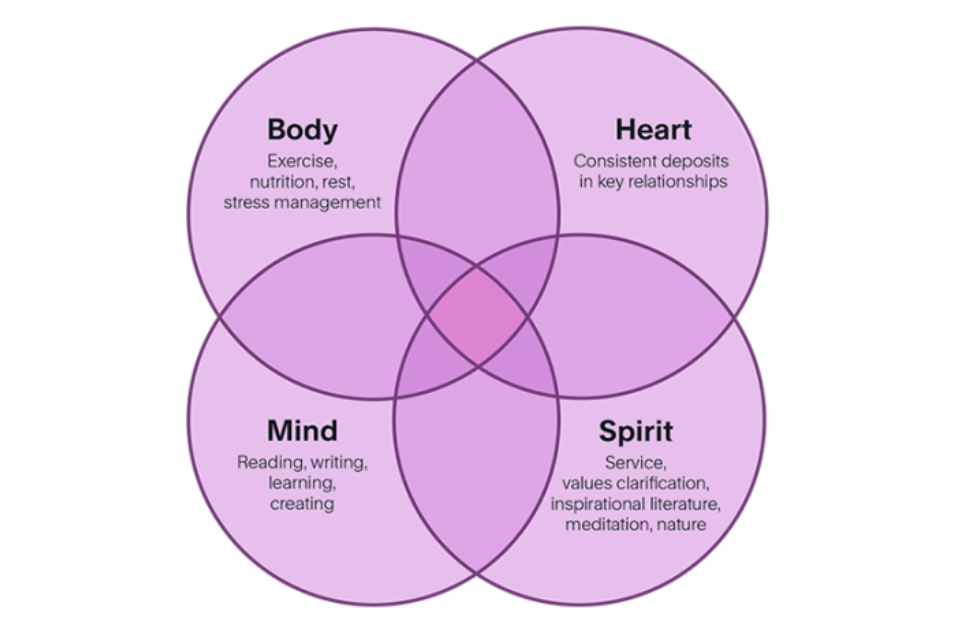
The Four Human Dimensions (Source: FranklinCovey)
This habit is crucial because it ensures that you continue to grow and develop, integrating and mastering the principles outlined in the previous habits at progressively higher levels.
Summary of The 7 Habits Part 4: How to Implement Them in Your Life
To implement these habits effectively, you must start from within. The inside-out approach suggests that changes in yourself should precede any attempts to change others or the environment. This means focusing on your own attitudes, behaviors, and actions first before trying to influence others.
For example, if you are a manager looking to improve your team's performance, start by examining your own leadership style and behavior. Are you providing clear guidance? Are you giving constructive feedback? By focusing on these internal factors first, you can then influence your team's performance more effectively.
Final Thoughts
The seven habits are designed to be interdependent and cumulative. Each habit builds upon the previous ones, creating an upward spiral of growth and development.
Steps of the Upward Spiral
- Learn: Educate yourself about each habit.
- Commit: Set intentions to incorporate habits into daily life.
- Do: Actively practice the habits consistently.
By consistently educating your conscience and making meaningful progress, you will experience continuous improvement and growth.
The journey to becoming highly effective is not a one-time achievement but a continuous process of learning, committing, and doing. It requires a deep understanding of the principles and a commitment to living them out in your daily life.
💡 If you find the summary of The 7 Habits of Highly Effective People useful, you might also enjoy listening to the key insights from Covey's other books like The 8th Habit on BeFreed.
Enhance Your Self-Help Journey with BeFreed
Are you willing to be more productive and efficient to achieve your goals? BeFreed, the best AI knowledge companion, built to help you excel in the areas that matter most - efficiency, productivity, mental health, social skills, business, and beyond. Chat with your AI reading buddy about your life and goals, and it’ll recommend books and make a summary tailored just for you. Already reading a specific book? Dive deeper with focused discussions to enrich your understanding and learning experience.
On top of that, BeFreed grants you access to 50,000+ AI-powered book summaries, letting you absorb key insights from trending titles in under 10 minutes. With one click, you can zoom in on the section that piques your interest and read a more detailed summary of that part - revolutionizing the way traditional book summary apps work. Anytime, anywhere, BeFreed turns life’s small moments into meaningful learning opportunities.


